Buy projektstarter.eu ?
We are moving the project
projektstarter.eu .
Are you interested in purchasing the domain
projektstarter.eu ?
domain@kv-gmbh.de · 0541-91531010
Buy projektstarter.eu ?
Is psychiatry bad?
Psychiatry itself is not inherently bad. It is a medical specialty that focuses on the diagnosis, treatment, and prevention of mental illnesses. However, like any field of medicine, there can be instances of unethical practices, overmedication, or misdiagnosis. It is important to recognize that there are both positive and negative aspects to psychiatry, and it is crucial to approach mental health care with a critical and informed perspective. Overall, psychiatry can be beneficial when practiced ethically and with the best interest of the patient in mind. **
Is psychiatry dangerous?
Psychiatry itself is not inherently dangerous, as it is a medical specialty focused on diagnosing and treating mental health disorders. However, there are potential risks associated with certain psychiatric treatments, such as medications and electroconvulsive therapy (ECT). These treatments can have side effects and risks, but when used appropriately and under the supervision of a qualified psychiatrist, the benefits often outweigh the potential dangers. It is important for individuals to work closely with their psychiatrist to understand the potential risks and benefits of any recommended treatment and to make informed decisions about their mental health care. **

Similar search terms for Cracked-Why-Psychiatry-Is
Top-Angebote
Products related to Cracked-Why-Psychiatry-Is:
-
James Davies & Ichiro Kishimi Cracked: Why Psychiatry Is Doing More Harm Than Good & The Courage To Be Disliked 2 Books Collection Set - Non FictionTitles in This Set:. Cracked: Why Psychiatry is Doing More Harm Than Good. The Courage To Be Disliked: How to free yourself, change your life and achieve real happiness. Condition: BRAND NEW. Format: Paperback. ISBN: 9789124102210. Overview:. Two provocative non-fiction titles sit at the crossroads of psychology, philosophy, and personal growth in this carefully chosen two-book collection. Cracked: Why Psychiatry is Doing More Harm Than Good presents a sharp, well-argued case against the over-medicalization of emotional distress, inviting readers to question conventional diagnostic labels and the pharmaceutical industry's influence on treatment. The author blends historical context, policy analysis, and patient experiences to illuminate how systemic pressures can shape care more than individual need. This is not anti-science; it’s a call for more rigorous, humane approaches that respect autonomy and the full spectrum of human distress. The Courage To Be Disliked offers a practical, life-changing framework drawn from Adlerian psychology: a candid exploration of how our beliefs about others’ approval shape our choices, and how choosing authenticity and responsibility can unlock genuine happiness. Together, the set equips readers to think critically about mental health and to adopt empowering strategies for everyday life. Ideal for curious readers, students of psychology, and anyone exploring what true wellbeing means in modern society.. What Makes This Collection Special:. Unlike a generic pairing, this collection blends rigorous critique with accessible self-help in a purposeful reading arc. Cracked challenges the status quo of psychiatry—its diagnoses, medications, and the commercial forces that influence care—inviting readers to demand transparency, patient autonomy, and evidence-based alternatives. The Courage To Be Disliked translates deep philosophy into practical steps: shedding the need for external validation, redefining success, and building a life aligned with personal values. Read together, they create a compelling journey from critical inquiry to actionable life-change, making the set ideal for book clubs, classroom discussions, or quiet, reflective reading. The cohesive paperback design and dual perspective make it a thoughtful gift for graduates, professionals, and anyone seeking a more deliberate, resilient approach to mind and life.. Books Included in This Collection:. Cracked: Why Psychiatry is Doing More Harm Than Good. This incisive critique argues that modern psychiatry’s reliance on medication and diagnostic labels can oversimplify distress while obscuring its social context. Davies traces how market forces, policy choices, and professional incentives shape treatment ideas, urging readers to demand greater transparency and patient-centered care. Written in clear, non-specialist language, it equips readers to ask the right questions of clinicians, weigh options beyond drugs, and consider alternatives that respect autonomy and...11,99 £*Shipping: 2,99 £Secure redirect to the provider
-
Rationality: What It Is, Why It Seems Scarce, Why It Matters by Steven PinkerDescription:. Condition: BRAND NEW. Format: Hardcover. In Rationality, Pinker rejects the cynical cliché that humans are simply an irrational species - cavemen out of time fatally cursed with biases, fallacies and illusions. After all, we discovered the laws of nature, lengthened and enriched our lives and set the benchmarks for rationality itself. Instead, he explains, we think in ways that suit the low-tech contexts in which we spend most of our lives, but fail to take advantage of the powerful tools of reasoning we have built up over millennia: logic, critical thinking, probability, causal inference, and decision-making under uncertainty. These tools are not a standard part of our educational curricula, and have never been presented clearly and entertainingly in a single book - until now.. Title. Rationality: What It Is, Why It Seems Scarce, Why It Matters by Steven Pinker. Delivery. Content. Reviews99,99 £*Shipping: 0,00 £Secure redirect to the provider
-
Rationality: What It Is, Why It Seems Scarce, Why It Matters by Steven Pinker - Non Fiction - PaperbackTitle:. Rationality: What It Is, Why It Seems Scarce, Why It Matters by Steven Pinker Condition: BRAND NEW. Format: Paperback. ISBN: 9780141989860 Overview:. In Rationality, Pinker pushes back against the view that humans are inherently irrational—prone to bias, superstition, and error. He argues that the capacity for reason is real and powerful, but that the modern world loads us with information, uncertainty, and new domains where old intuitions misfire. The paradox is obvious: vaccines were developed in record time, yet misinformation travels faster than the truth. Pinker explains how we rely on mental shortcuts—heuristics—when they serve simple, familiar contexts, but we neglect the robust tools of reasoning that have grown more precise over centuries: formal logic, probability, statistics, causal inference, and careful evaluation of evidence. The book maps these tools into a practical framework that readers can apply to everyday decisions—whether evaluating news stories, diagnosing a problem at work, or weighing risky choices about health and safety. Far from being dry theory, Rationality is a lively, accessible tour through ideas, examples, and experiments that illuminate how to think more clearly under uncertainty. Pinker not only defends rational thinking but also reveals its limits and the ethical responsibilities that come with using reason well. The goal is simple: equip readers with a reliable toolkit for navigating a complex information landscape and to restore confidence in the power of human reason. What Makes This Book Stand Out:. Pinker’s Rationality stands out for its deft blend of philosophy, cognitive science, and practical application. He avoids dense jargon and instead builds a coherent, actionable framework around logic, probability, and causal reasoning, showing how these tools illuminate everyday claims. The writing is brisk, witty, and deeply informative, making sophisticated ideas inviting for newcomers while still rewarding curious readers who already enjoy non-fiction. Each chapter translates abstract principles into concrete skills—how to assess evidence, how to reason under uncertainty, how to distinguish correlation from causation, and how to calibrate confidence in your conclusions. With timely references to misinformation, news media, and public health messaging, the book offers not just critique but a constructive path forward: a clear, reliable method for improving thinking in a complex world. Who This Book Is Perfect For:. Whether you’re a curious reader, a student tackling critical thinking, a professional navigating data-driven decisions, or a parent seeking to encourage evidence-based thinking, Rationality offers tangible value. Fans of science, psychology, and epistemology will appreciate Pinker’s accessible synthesis of ideas, while general readers will gain practical strategies for evaluating headlines and studies, weighing risks, and making informed choices under uncertainty. It’s an excellent pick for...10,99 £*Shipping: 2,99 £Secure redirect to the provider


-
Why is social psychiatry so strongly neglected in scientific research compared to individual psychiatry?
Social psychiatry is often neglected in scientific research compared to individual psychiatry because of the complexity and challenges associated with studying the impact of social factors on mental health. Individual psychiatry focuses on diagnosing and treating specific mental health disorders in individuals, which can be more straightforward to study and measure. In contrast, social psychiatry involves understanding the broader social determinants of mental health, such as poverty, discrimination, and social support, which are more difficult to quantify and study in a controlled scientific setting. Additionally, there may be a bias towards individual-focused interventions and treatments in the field of psychiatry, leading to less emphasis on the importance of social factors in mental health research. **
-
What is child psychiatry?
Child psychiatry is a branch of psychiatry that focuses on the diagnosis, treatment, and prevention of mental health disorders in children and adolescents. Child psychiatrists are medical doctors who specialize in understanding the unique emotional, behavioral, and developmental needs of young patients. They work with children and their families to provide therapy, medication management, and support to help improve mental well-being and overall quality of life. Child psychiatry plays a crucial role in addressing a wide range of issues such as anxiety, depression, ADHD, autism, and trauma in young individuals. **
-
What is forensic psychiatry?
Forensic psychiatry is a specialized branch of psychiatry that focuses on the interface between mental health and the law. Forensic psychiatrists work at the intersection of mental health and the legal system, providing evaluations, consultations, and expert testimony in legal cases. They assess individuals for mental competency, evaluate the impact of mental illness on criminal behavior, and provide insights into the mental state of individuals involved in legal proceedings. Their work helps inform legal decisions and outcomes by providing a deeper understanding of the psychological factors at play. **
-
Why do patients in psychiatry stop eating?
Patients in psychiatry may stop eating for a variety of reasons, including the impact of their mental health condition on their appetite and eating habits. Conditions such as depression, anxiety, and eating disorders can lead to changes in appetite, disinterest in food, or a lack of motivation to eat. Additionally, side effects of certain psychiatric medications, such as nausea or changes in taste perception, can also contribute to a decrease in appetite. Furthermore, underlying psychological issues, such as a distorted body image or a desire to exert control, can also play a role in causing patients to stop eating. It is important for healthcare providers to address these underlying factors and provide appropriate support and treatment to help patients regain a healthy relationship with food. **


What is there besides psychiatry?
Besides psychiatry, there are various other fields within the mental health profession such as psychology, counseling, social work, and psychiatric nursing. These fields focus on different aspects of mental health and well-being, offering a range of therapeutic approaches and interventions to support individuals in managing their mental health challenges. Additionally, alternative and complementary therapies such as art therapy, music therapy, and mindfulness practices can also play a role in promoting mental wellness and healing. **
Is it normal in psychiatry?
In psychiatry, what is considered "normal" can vary depending on the individual's cultural background, personal experiences, and societal norms. Psychiatrists typically assess a person's thoughts, feelings, and behaviors in relation to their functioning and overall well-being. It is important to remember that everyone experiences mental health challenges differently, and seeking help from a mental health professional can provide valuable support and guidance. **
Top-Angebote
Products related to Cracked-Why-Psychiatry-Is:
-
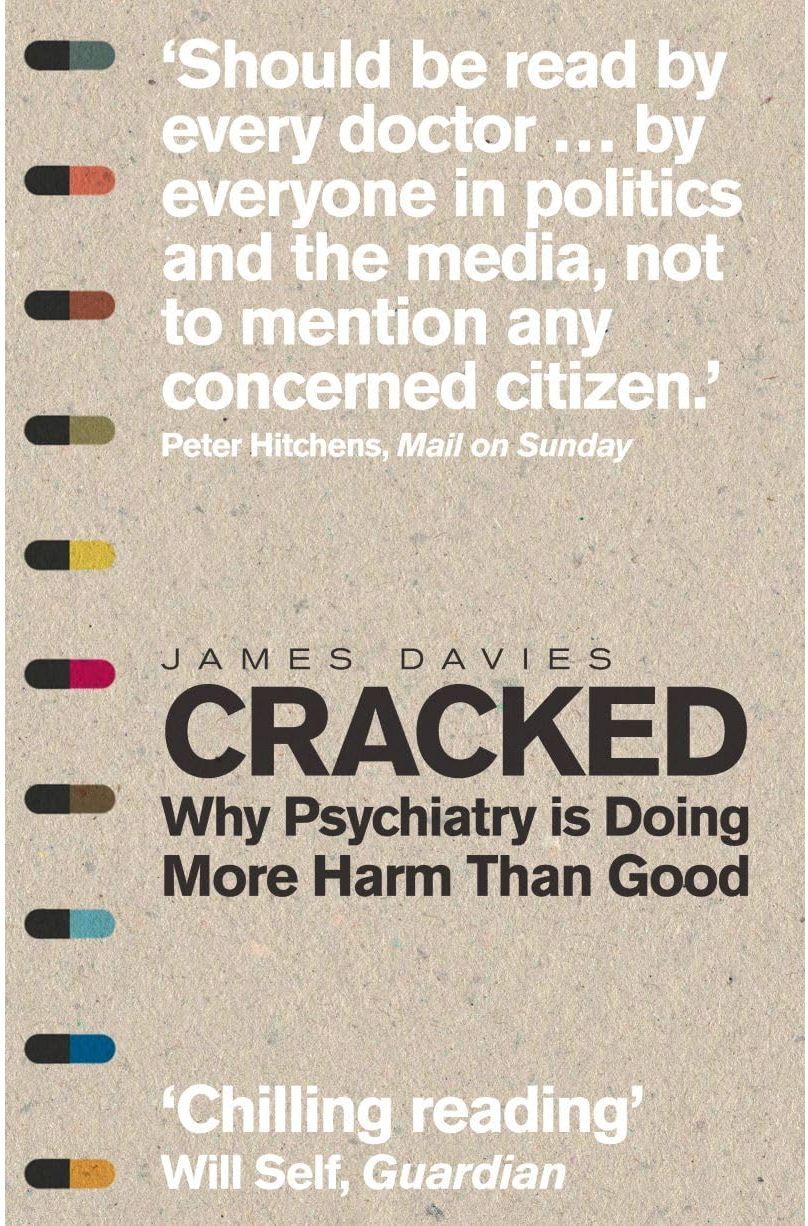
Icon Books Cracked: Why Psychiatry is Doing More Harm Than Good by James DaviesWhy is psychiatry such big business? Why are so many psychiatric drugs prescribed - 47 million antidepressant prescriptions in the UK alone last year - and why, without solid scientific justification, has the number of mental disorders risen from 106 in 1952 to 374 today?The everyday sufferings and setbacks of life are now 'medicalised' into illnesses that require treatment - usually with highly profitable drugs. Psychological therapist James Davies uses his insider knowledge to illustrate for a general readership how psychiatry has put riches and medical status above patients' well-being. The charge sheet is damning: negative drug trials routinely buried; antidepressants that work no better than placebos; research regularly manipulated to produce positive results; doctors, seduced by huge pharmaceutical rewards, creating more disorders and prescribing more pills; and ethical, scientific and treatment flaws unscrupulously concealed by mass-marketing.Cracked reveals for the first time the true human cost of an industry that, in the name of helping others, has actually been helping itself.3,99 £*Shipping: 1,99 £Secure redirect to the provider
-
Cracked: Why Psychiatry Is Doing More Harm Than Good by James Davies - Non Fiction - PaperbackTitle:. Cracked: Why Psychiatry is Doing More Harm Than Good by James Davies Condition: BRAND NEW. Format: Paperback. ISBN: 9781848316546 Overview:. Cracked presents a bold, evidence-informed challenge to the conventional wisdom surrounding mental health care. In this compelling non-fiction work, James Davies asks readers to scrutinise the foundations of modern psychiatry and the ways in which diagnostic labels, treatment norms, and pharmaceutical approaches have shaped practice. The book is written for curious readers who want to understand not just what is done in mental health, but why it is done that way and what the consequences have been for individuals and families. Davies offers a rigorous, readable critique that questions the widespread confidence in medicalised responses to distress, while avoiding dogma. Instead, it invites readers to weigh competing explanations, consider alternatives to standard interventions, and seek care that is grounded in transparent evidence and patient-centred values. This paperback edition makes a provocative, timely contribution accessible to students, professionals, caregivers, and general readers alike, encouraging thoughtful dialogue about what truly helps people live well. The tone is measured yet urgent, inviting a shift in perspective without dismissing the very real suffering many experience. What Makes This Book Stand Out:. What sets Cracked apart is its careful balance of controversy and care. Davies doesn’t shy away from challenging deeply held beliefs about psychiatry, yet he anchors his critique in accessible analysis and cited research. The book dissects core assumptions—diagnostic categories, the role of medication, and the long-term outcomes of common treatments—without resorting to sensationalism. Its strength lies in translating complex debates into clear arguments that non-specialists can follow, while offering enough nuance to satisfy clinicians and students. Readers will appreciate the calm, evidence-based approach that still carries a persuasive, almost investigative momentum. For anyone navigating mental health care, Cracked offers a fresh lens through which to view symptoms, treatment options, and the broader healthcare system, making it a thought-provoking addition to any non-fiction shelf. Who This Book Is Perfect For:. This book is ideal for readers who want a critical, evidence-driven perspective on mental health and psychiatry. It speaks to students and professionals in psychology, psychiatry, nursing, social work, and health policy, as well as patients and families seeking greater clarity about treatment choices. Gift buyers, book clubs, and curious readers with an interest in science, medicine, and public health will find it an engaging, discussion-stimulating choice. If you enjoy non-fiction that interrogates established narratives, this title belongs on your shelf or in your next thoughtful gift basket. Key Highlights:. Provocative, evidence-informed critique of contemporary...2,99 £*Shipping: 2,99 £Secure redirect to the provider
-
James Davies & Ichiro Kishimi Cracked: Why Psychiatry Is Doing More Harm Than Good & The Courage To Be Disliked 2 Books Collection Set - Non FictionTitles in This Set:. Cracked: Why Psychiatry is Doing More Harm Than Good. The Courage To Be Disliked: How to free yourself, change your life and achieve real happiness. Condition: BRAND NEW. Format: Paperback. ISBN: 9789124102210. Overview:. Two provocative non-fiction titles sit at the crossroads of psychology, philosophy, and personal growth in this carefully chosen two-book collection. Cracked: Why Psychiatry is Doing More Harm Than Good presents a sharp, well-argued case against the over-medicalization of emotional distress, inviting readers to question conventional diagnostic labels and the pharmaceutical industry's influence on treatment. The author blends historical context, policy analysis, and patient experiences to illuminate how systemic pressures can shape care more than individual need. This is not anti-science; it’s a call for more rigorous, humane approaches that respect autonomy and the full spectrum of human distress. The Courage To Be Disliked offers a practical, life-changing framework drawn from Adlerian psychology: a candid exploration of how our beliefs about others’ approval shape our choices, and how choosing authenticity and responsibility can unlock genuine happiness. Together, the set equips readers to think critically about mental health and to adopt empowering strategies for everyday life. Ideal for curious readers, students of psychology, and anyone exploring what true wellbeing means in modern society.. What Makes This Collection Special:. Unlike a generic pairing, this collection blends rigorous critique with accessible self-help in a purposeful reading arc. Cracked challenges the status quo of psychiatry—its diagnoses, medications, and the commercial forces that influence care—inviting readers to demand transparency, patient autonomy, and evidence-based alternatives. The Courage To Be Disliked translates deep philosophy into practical steps: shedding the need for external validation, redefining success, and building a life aligned with personal values. Read together, they create a compelling journey from critical inquiry to actionable life-change, making the set ideal for book clubs, classroom discussions, or quiet, reflective reading. The cohesive paperback design and dual perspective make it a thoughtful gift for graduates, professionals, and anyone seeking a more deliberate, resilient approach to mind and life.. Books Included in This Collection:. Cracked: Why Psychiatry is Doing More Harm Than Good. This incisive critique argues that modern psychiatry’s reliance on medication and diagnostic labels can oversimplify distress while obscuring its social context. Davies traces how market forces, policy choices, and professional incentives shape treatment ideas, urging readers to demand greater transparency and patient-centered care. Written in clear, non-specialist language, it equips readers to ask the right questions of clinicians, weigh options beyond drugs, and consider alternatives that respect autonomy and...11,99 £*Shipping: 2,99 £Secure redirect to the provider
-
Rationality: What It Is, Why It Seems Scarce, Why It Matters by Steven PinkerDescription:. Condition: BRAND NEW. Format: Hardcover. In Rationality, Pinker rejects the cynical cliché that humans are simply an irrational species - cavemen out of time fatally cursed with biases, fallacies and illusions. After all, we discovered the laws of nature, lengthened and enriched our lives and set the benchmarks for rationality itself. Instead, he explains, we think in ways that suit the low-tech contexts in which we spend most of our lives, but fail to take advantage of the powerful tools of reasoning we have built up over millennia: logic, critical thinking, probability, causal inference, and decision-making under uncertainty. These tools are not a standard part of our educational curricula, and have never been presented clearly and entertainingly in a single book - until now.. Title. Rationality: What It Is, Why It Seems Scarce, Why It Matters by Steven Pinker. Delivery. Content. Reviews99,99 £*Shipping: 0,00 £Secure redirect to the provider
-
Is psychiatry bad?
Psychiatry itself is not inherently bad. It is a medical specialty that focuses on the diagnosis, treatment, and prevention of mental illnesses. However, like any field of medicine, there can be instances of unethical practices, overmedication, or misdiagnosis. It is important to recognize that there are both positive and negative aspects to psychiatry, and it is crucial to approach mental health care with a critical and informed perspective. Overall, psychiatry can be beneficial when practiced ethically and with the best interest of the patient in mind. **
-
Is psychiatry dangerous?
Psychiatry itself is not inherently dangerous, as it is a medical specialty focused on diagnosing and treating mental health disorders. However, there are potential risks associated with certain psychiatric treatments, such as medications and electroconvulsive therapy (ECT). These treatments can have side effects and risks, but when used appropriately and under the supervision of a qualified psychiatrist, the benefits often outweigh the potential dangers. It is important for individuals to work closely with their psychiatrist to understand the potential risks and benefits of any recommended treatment and to make informed decisions about their mental health care. **
-
Why is social psychiatry so strongly neglected in scientific research compared to individual psychiatry?
Social psychiatry is often neglected in scientific research compared to individual psychiatry because of the complexity and challenges associated with studying the impact of social factors on mental health. Individual psychiatry focuses on diagnosing and treating specific mental health disorders in individuals, which can be more straightforward to study and measure. In contrast, social psychiatry involves understanding the broader social determinants of mental health, such as poverty, discrimination, and social support, which are more difficult to quantify and study in a controlled scientific setting. Additionally, there may be a bias towards individual-focused interventions and treatments in the field of psychiatry, leading to less emphasis on the importance of social factors in mental health research. **
-
What is child psychiatry?
Child psychiatry is a branch of psychiatry that focuses on the diagnosis, treatment, and prevention of mental health disorders in children and adolescents. Child psychiatrists are medical doctors who specialize in understanding the unique emotional, behavioral, and developmental needs of young patients. They work with children and their families to provide therapy, medication management, and support to help improve mental well-being and overall quality of life. Child psychiatry plays a crucial role in addressing a wide range of issues such as anxiety, depression, ADHD, autism, and trauma in young individuals. **
Similar search terms for Cracked-Why-Psychiatry-Is
-
Rationality: What It Is, Why It Seems Scarce, Why It Matters by Steven Pinker - Non Fiction - PaperbackTitle:. Rationality: What It Is, Why It Seems Scarce, Why It Matters by Steven Pinker Condition: BRAND NEW. Format: Paperback. ISBN: 9780141989860 Overview:. In Rationality, Pinker pushes back against the view that humans are inherently irrational—prone to bias, superstition, and error. He argues that the capacity for reason is real and powerful, but that the modern world loads us with information, uncertainty, and new domains where old intuitions misfire. The paradox is obvious: vaccines were developed in record time, yet misinformation travels faster than the truth. Pinker explains how we rely on mental shortcuts—heuristics—when they serve simple, familiar contexts, but we neglect the robust tools of reasoning that have grown more precise over centuries: formal logic, probability, statistics, causal inference, and careful evaluation of evidence. The book maps these tools into a practical framework that readers can apply to everyday decisions—whether evaluating news stories, diagnosing a problem at work, or weighing risky choices about health and safety. Far from being dry theory, Rationality is a lively, accessible tour through ideas, examples, and experiments that illuminate how to think more clearly under uncertainty. Pinker not only defends rational thinking but also reveals its limits and the ethical responsibilities that come with using reason well. The goal is simple: equip readers with a reliable toolkit for navigating a complex information landscape and to restore confidence in the power of human reason. What Makes This Book Stand Out:. Pinker’s Rationality stands out for its deft blend of philosophy, cognitive science, and practical application. He avoids dense jargon and instead builds a coherent, actionable framework around logic, probability, and causal reasoning, showing how these tools illuminate everyday claims. The writing is brisk, witty, and deeply informative, making sophisticated ideas inviting for newcomers while still rewarding curious readers who already enjoy non-fiction. Each chapter translates abstract principles into concrete skills—how to assess evidence, how to reason under uncertainty, how to distinguish correlation from causation, and how to calibrate confidence in your conclusions. With timely references to misinformation, news media, and public health messaging, the book offers not just critique but a constructive path forward: a clear, reliable method for improving thinking in a complex world. Who This Book Is Perfect For:. Whether you’re a curious reader, a student tackling critical thinking, a professional navigating data-driven decisions, or a parent seeking to encourage evidence-based thinking, Rationality offers tangible value. Fans of science, psychology, and epistemology will appreciate Pinker’s accessible synthesis of ideas, while general readers will gain practical strategies for evaluating headlines and studies, weighing risks, and making informed choices under uncertainty. It’s an excellent pick for...10,99 £*Shipping: 2,99 £Secure redirect to the provider
-
Profile Books The Vital Question: Why Is Life The Way It Is Comprehensive Review - Non Fiction - PaperbackTitle:. The Vital Question: Why Is Life The Way It Is Format: Paperback Overview:. The Vital Question tackles one of biology’s most profound puzzles by tracing the relentless drive that shaped every living organism on Earth. Driven by the fundamental need to capture, convert, and distribute energy, life followed a rigid set of physical rules that determined whether species remained simple or grew in astonishing complexity. This accessible yet rigorous work explores cellular respiration, microbial ecosystems, and the ancient symbiotic events that gave rise to mitochondria, the tiny powerhouses governing animal, plant, and fungal development. By mapping how metabolic efficiency dictated evolutionary branching points, the narrative reveals why certain biological pathways flourished while others stalled. Readers gain a clear understanding of how microscopic chemical reactions echo far beyond the cell, influencing ecological balance, adaptation strategies, and even human health. The prose strips away dense jargon without diluting scientific accuracy, offering a cohesive framework that connects paleontology, modern physiology, and environmental science. Whether you are encountering these concepts for the first time or seeking a fresh perspective on established theories, this volume delivers a compelling case study of nature’s engineering. It serves as an essential guide for anyone craving meaningful context about where life began, how it transformed over billions of years, and what underlying mechanisms continue to sustain ecosystems today. What Makes This Book Stand Out:. What distinguishes this title from standard popular science releases is its unapologetic focus on energy as the primary currency of existence. Rather than relying solely on genetic mutations or natural selection as explanatory tools, the narrative centres on thermodynamic constraints and biochemical trading. This shift in perspective challenges conventional evolutionary models and encourages readers to reconsider how seemingly unrelated phenomena cell division, ageing, climate patterns, and resource competition are actually bound together by metabolic economics. The author successfully translates complex laboratory findings into vivid, logical argumentation, avoiding speculative leaps in favour of evidence-backed reasoning. Rich historical context surrounds the discovery of endosymbiosis, while contemporary research keeps the material firmly grounded in current academic discourse. Strategic visual aids and structural breaks clarify intricate biological processes without overwhelming the page layout. The result is a tightly constructed volume that rewards careful reading, offering sustained intellectual engagement rather than fleeting entertainment. By framing biological history as a continuous quest for energy efficiency, the book transforms abstract scientific theory into a tangible story of survival and adaptation that feels remarkably relevant to modern environmental and health...12,99 £*Shipping: 2,99 £Secure redirect to the provider
-
Professor Joan Magretta What Management Is: How It Works And Why It's Everyone's Business - Non Fiction - PaperbackTitle:. What Management Is: How it works and why it's everyone's business Condition: BRAND NEW. Format: Paperback. ISBN: 9781781251478 Overview:. Clear, practical, and surprisingly fresh, What Management Is cuts through jargon to reveal what really happens when an organization performs. This concise guide distills the essential duties of management into a relatable framework anyone can apply—from first‑time team leaders to seasoned executives. You’ll discover why a strong business model and a clear strategy are not optional extras but core drivers of value, growth, and resilience. The book uses accessible language and concrete examples to answer timeless questions: How do you shape an organization that actually works? What does it mean to measure performance in a way that makes teams smarter, faster, and more aligned? Why do some ventures flourish while others falter, even when they share promising ideas? Written for readers who crave clarity over buzzwords, it positions management as a social innovation—a discipline that can be learned, practiced, and refined. Whether you’re guiding a startup, steering a corporate department, or mentoring others, this paperback edition offers a reliable map for turning theory into tangible results, one decision at a time. What Makes This Book Stand Out:. What Management Is stands out by translating complex management theory into practical, repeatable actions. Authored by Joan Magretta (with Nan Stone) and drawing on her Harvard Business Review‑informed perspective, the book presents a crisp, memorable framework for value creation, strategy, and organization design. It reframes traditional routines—planning, budgeting, and performance measurement—into disciplines that work together to drive real outcomes. The tone is calm, confident, and relentlessly customer‑focused: it teaches readers to see opportunities, not just problems, and to connect daily activities to overarching business goals. Crucially, it treats management as everyone’s business—empowering readers at every level to contribute to a healthier, more effective organization. The result is a compact, high‑signal guide that remains indispensable whether you’re pitching ideas to a board or leading your own team through change. Who This Book Is Perfect For:. This book is ideal for aspiring managers stepping into leadership for the first time, mid‑level executives seeking a clearer mental map of how their units fit the whole, and small business owners wanting disciplined, repeatable practices. It’s also a strong companion for MBA students, emerging leaders in fast‑growth firms, and anyone curious about how great organizations sustain performance. If you’ve ever wondered what management actually entails beyond daily tasks—how to align people, processes, and purpose or how to determine the right metrics to steer a company—this title speaks directly to you. The approachable format makes it a smart gift for graduates, new managers, or teams embarking on a period...99,99 £*Shipping: 0,00 £Secure redirect to the provider
-
What is forensic psychiatry?
Forensic psychiatry is a specialized branch of psychiatry that focuses on the interface between mental health and the law. Forensic psychiatrists work at the intersection of mental health and the legal system, providing evaluations, consultations, and expert testimony in legal cases. They assess individuals for mental competency, evaluate the impact of mental illness on criminal behavior, and provide insights into the mental state of individuals involved in legal proceedings. Their work helps inform legal decisions and outcomes by providing a deeper understanding of the psychological factors at play. **
-
Why do patients in psychiatry stop eating?
Patients in psychiatry may stop eating for a variety of reasons, including the impact of their mental health condition on their appetite and eating habits. Conditions such as depression, anxiety, and eating disorders can lead to changes in appetite, disinterest in food, or a lack of motivation to eat. Additionally, side effects of certain psychiatric medications, such as nausea or changes in taste perception, can also contribute to a decrease in appetite. Furthermore, underlying psychological issues, such as a distorted body image or a desire to exert control, can also play a role in causing patients to stop eating. It is important for healthcare providers to address these underlying factors and provide appropriate support and treatment to help patients regain a healthy relationship with food. **
-
What is there besides psychiatry?
Besides psychiatry, there are various other fields within the mental health profession such as psychology, counseling, social work, and psychiatric nursing. These fields focus on different aspects of mental health and well-being, offering a range of therapeutic approaches and interventions to support individuals in managing their mental health challenges. Additionally, alternative and complementary therapies such as art therapy, music therapy, and mindfulness practices can also play a role in promoting mental wellness and healing. **
-
Is it normal in psychiatry?
In psychiatry, what is considered "normal" can vary depending on the individual's cultural background, personal experiences, and societal norms. Psychiatrists typically assess a person's thoughts, feelings, and behaviors in relation to their functioning and overall well-being. It is important to remember that everyone experiences mental health challenges differently, and seeking help from a mental health professional can provide valuable support and guidance. **
* All prices are inclusive of VAT and, if applicable, plus shipping costs. The offer information is based on the details provided by the respective shop and is updated through automated processes. Real-time updates do not occur, so deviations can occur in individual cases. ** Note: Parts of this content were created by AI.