Buy projektstarter.eu ?
We are moving the project
projektstarter.eu .
Are you interested in purchasing the domain
projektstarter.eu ?
domain@kv-gmbh.de · 0541-91531010
Buy projektstarter.eu ?
Are business transactions affected by equity or not?
Yes, business transactions can be affected by equity. Equity represents the ownership interest in a company, and it can impact business transactions in various ways. For example, when a company seeks to raise funds through equity financing, it can issue new shares of stock, which can dilute the ownership of existing shareholders. Additionally, the level of equity in a company can impact its ability to secure loans and other forms of financing. Furthermore, the distribution of equity among shareholders can influence decision-making and governance within the company, which can in turn affect business transactions. **
How is equity calculated?
Equity is calculated by subtracting the total liabilities of a company from its total assets. In other words, equity represents the ownership interest in a company's assets after all debts and obligations have been paid off. It is a measure of the company's net worth and is often used by investors and analysts to assess the financial health and value of a company. Equity can also be calculated for individuals by subtracting their total liabilities (such as mortgages, loans, and credit card debt) from their total assets (such as savings, investments, and property). **


Similar search terms for Equity
Top-Angebote
Products related to Equity:
-
Authors Equity The Simple Path to Wealth: Your Road Map to Financial Independence and a Rich, Free Life by J L CollinsWhat if the path to wealth isn't about timing the market or picking hot stocks, or even about paying someone else to do it for you? What if it’s actually about following a radically simple plan that’s not only easier to implement, but also more lucrative than the alternatives? Drawing from fifty years of investing experience, and born out of a series of letters the author wrote to his daughter, The Simple Path to Wealth has become foundational to the FIRE (Financial Independence, Retire Early) movement, inspiring hundreds of thousands of readers to reimagine their relationship with money and freedom. The real-world success of Collins' approach is documented in Pathfinders, his collection of stories from readers who have transformed their financial lives using his method. Whether you care deeply about money, or never want to think about it at all, you’re living in a culture of spending. Everyone’s telling you that handing over your cash for this gadget, this potion, this lifestyle is the key to happiness. Meanwhile, the reality is that happiness is more likely to come from having the financial freedom to live the life you really want. Whatever your relationship with money, you will be heartened by Collins’ essential insight, which is that simplicity beats complexity every time. This comprehensive guide covers everything from debt elimination to optimizing retirement accounts, all while exposing the marketing myths and investment industry practices that keep most people from building real wealth. Collins shares specific, actionable strategies for both wealth-building and wealth-preservation phases, with a straightforward approach to asset allocation that anyone can implement. Collins' direct, often irreverent style makes complex financial concepts crystal clear, giving readers the tools and confidence to take control of their financial future. More than just another investment book, The Simple Path to Wealth is a blueprint for financial independence – showing readers how to break free from the financial industry’s traps and live life on their own terms.12,99 £*Shipping: 2,99 £Secure redirect to the provider
-
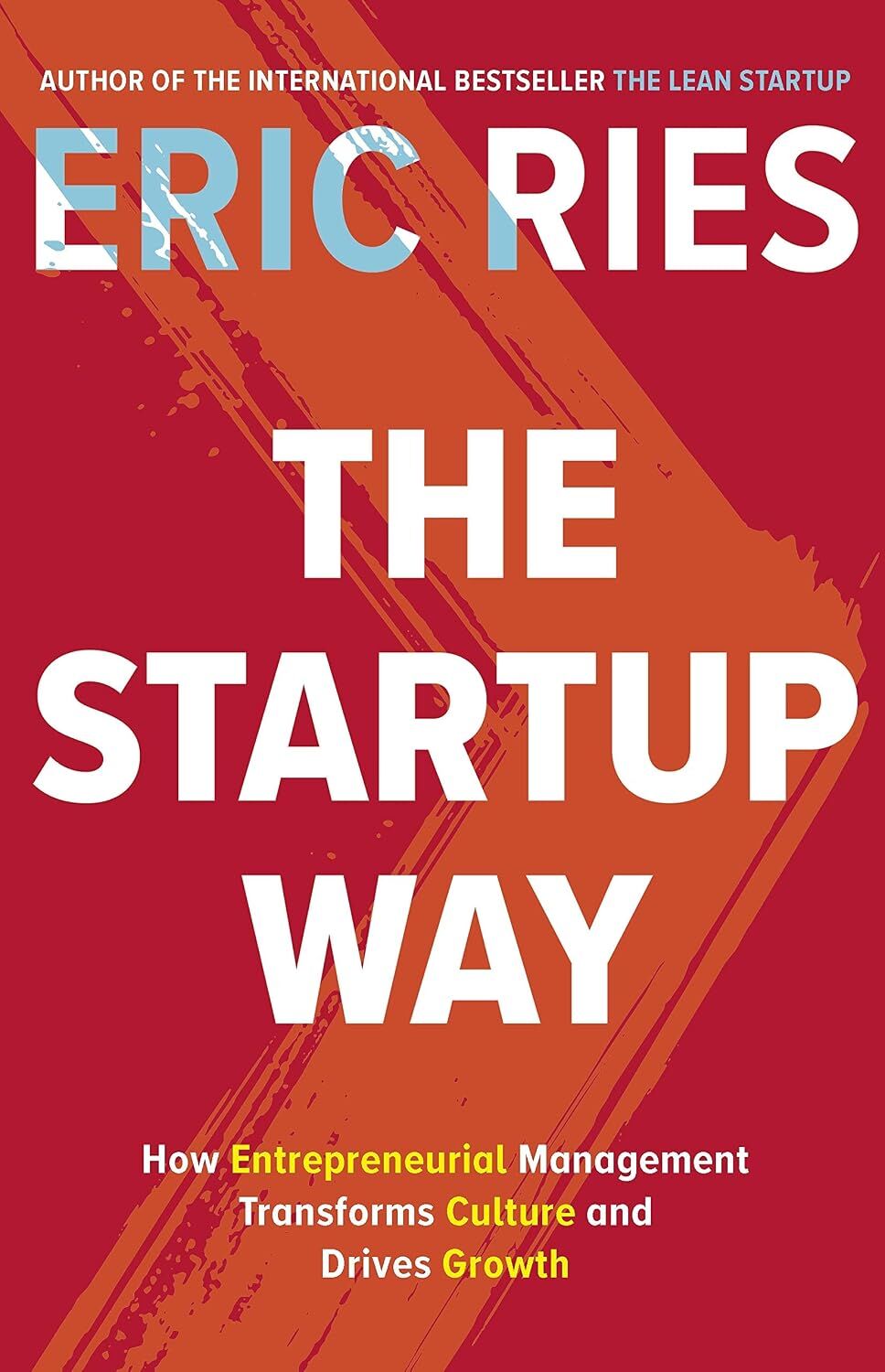
Portfolio Penguin Eric Ries Collection 2 Books Set - The Lean Startup & The Startup Way - Paperback - Business & Entrepreneurship Bundle for Founders and ManagersThis two-book collection brings together Eric Ries's most influential works on modern entrepreneurship: The Lean Startup and The Startup Way. Together they set out a rigorous, practical methodology for building successful businesses in conditions of extreme uncertainty, then show how those same lean principles can be scaled up to transform established, bureaucratic organisations. The Lean Startup introduced the world to concepts such as the minimum viable product, validated learning, and the build-measure-learn feedback loop. Drawing on his own experiences as a founder and advisor, Ries argues that startups succeed not through grand five-year plans but through rapid experimentation and continuous improvement. Ideal for founders, managers, and anyone curious about innovation, this set is a complete primer on lean thinking from the man who coined the term. The books are in brand new condition, published by Portfolio Penguin, and are suitable for adult readers.10,99 £*Shipping: 2,99 £Secure redirect to the provider
-
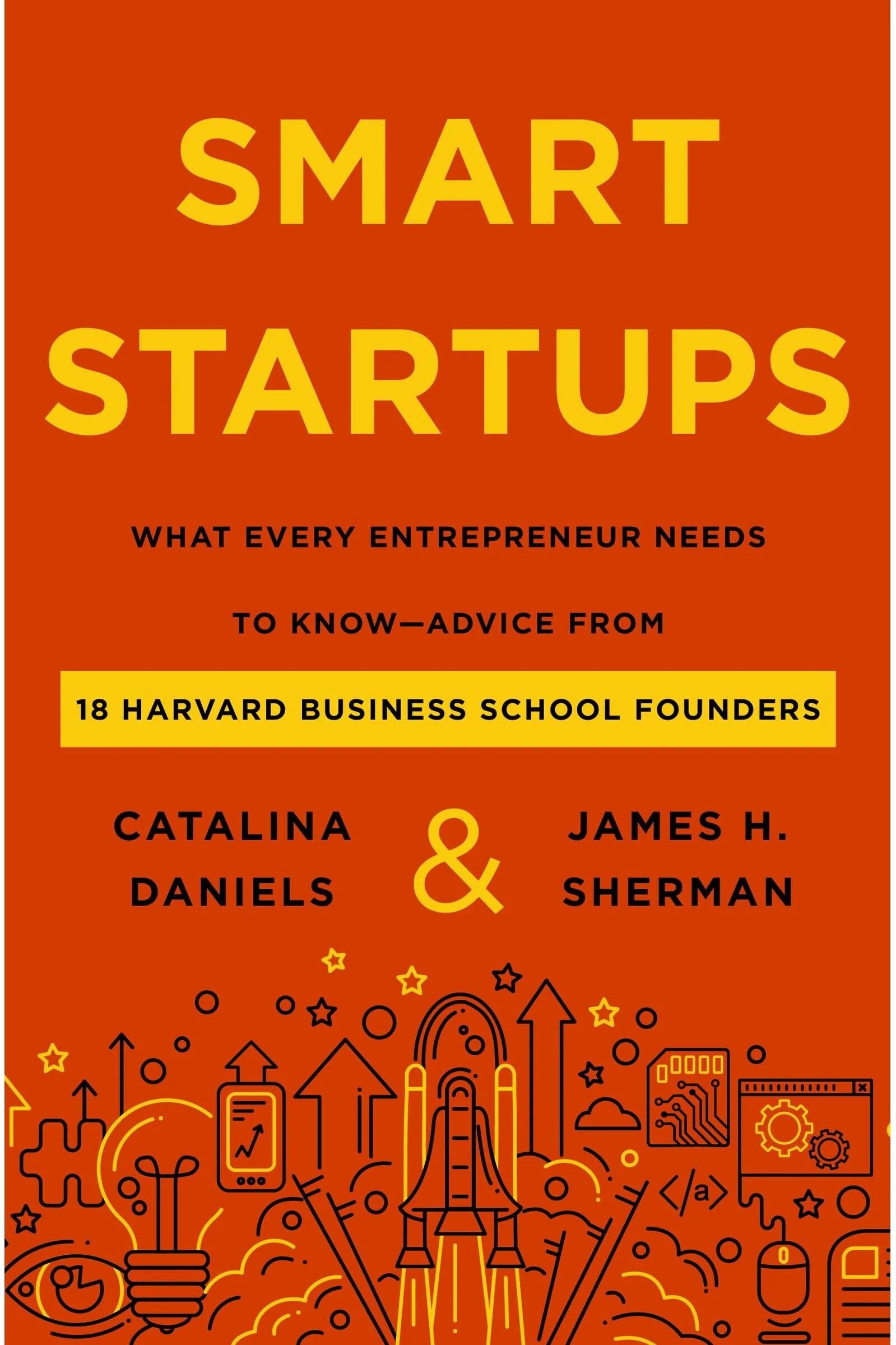
Harper Business Smart Startups: What Every Entrepreneur Needs to Know by Catalina Daniels & James H. Sherman - Hardback - Business & Entrepreneurship Non FictionSmart Startups: What Every Entrepreneur Needs to Know is a candid guide to building a company that lasts. Written by two Harvard Business School classmates turned founders and angel investors, it goes beyond classroom theory to show what actually happens inside eighteen startups launched by fellow HBS graduates. Packed with honest case studies, hard-won lessons, and unexpected pitfalls, this book is essential reading for anyone serious about turning an idea into a viable business. The authors, Catalina Daniels and James H. Sherman, met as classmates at Harvard Business School, where they studied the fundamentals of entrepreneurship together. Years later, after each had founded and exited multiple companies and become active angel investors, they discovered that their real-world experiences often diverged sharply from the conventional wisdom they learned in school.11,99 £*Shipping: 2,99 £Secure redirect to the provider


-
What is equity capital?
Equity capital refers to the funds that a company raises by selling shares of ownership in the business. These shares represent ownership in the company and entitle the shareholders to a portion of the company's profits and a say in its decision-making processes. Equity capital is a crucial source of long-term funding for a company and can be raised through the sale of common stock or preferred stock. Unlike debt capital, equity capital does not need to be repaid and does not accrue interest, but it does dilute the ownership stake of existing shareholders. **
-
What is the accumulated equity?
The accumulated equity is the total value of an asset after subtracting any liabilities or debts associated with it. It represents the ownership interest or value that an individual or entity has in the asset. Accumulated equity can increase over time as the asset appreciates in value or as debts are paid off, resulting in a higher net worth for the owner. It is an important measure of financial health and can be used to determine the overall value of an investment or property. **
-
'Equity type or legal type?'
Equity type refers to the ownership structure of a company, indicating whether it is publicly traded or privately held. Legal type, on the other hand, refers to the legal structure of a business entity, such as a corporation, partnership, or sole proprietorship. While equity type focuses on ownership, legal type is concerned with the legal rights and responsibilities of the entity. Both equity type and legal type are important considerations when determining the structure and governance of a business. **
-
How do you calculate equity?
Equity is calculated by subtracting the total liabilities of a company from its total assets. The formula for calculating equity is: Equity = Total Assets - Total Liabilities. This calculation gives a measure of the ownership interest in a company, representing the residual value of the assets after all debts and liabilities have been paid off. Equity is an important financial metric that is used to assess the financial health and stability of a company. **


How can one improve equity?
One can improve equity by addressing systemic barriers and biases that contribute to inequality. This can be achieved through policies and practices that promote equal access to opportunities, resources, and representation for all individuals, regardless of their background. Additionally, promoting diversity and inclusion in all aspects of society can help to create a more equitable environment. It is also important to actively listen to and amplify the voices of marginalized communities in decision-making processes. **
How does depreciation affect equity?
Depreciation reduces the value of assets on the balance sheet, which in turn reduces the overall equity of the company. This is because equity is calculated as the difference between a company's assets and liabilities. As the value of assets decreases due to depreciation, the overall equity of the company also decreases. This can impact the financial health of the company and its ability to attract investors or secure financing. **
Top-Angebote
Products related to Equity:
-
Authors Equity Superagency: What Could Possibly Go Right With Our AI Future - Non Fiction - PaperbackTitle:. Superagency: What Could Possibly Go Right With Our AI Future Format: Paperback Overview:. In Superagency, Reid Hoffman and journalist Greg Beato offer a bold, human-centered vision of an AI-powered future. This accessible non-fiction work reframes the conversation around artificial intelligence—from fear-based headlines to a practical playbook for expanding human agency in the workplace, in governance, and in everyday decision-making. The authors argue that AI can augment our capabilities, not replace them, and they map a road to responsible, creative collaboration between people and machines. The book blends real-world business insight with thoughtful ethical considerations, delivering clear strategies for leaders, teams, and curious readers who want to participate in shaping a positive trajectory. Designed for non-technical audiences as well as seasoned tech watchers, it explains concepts with tangible examples, case studies, and actionable steps that readers can apply immediately. If you’re seeking a hopeful yet grounded take on how AI can amplify opportunity—without surrendering control—this paperback guides you toward a more confident, proactive relationship with technology. A timely read for entrepreneurs, policy-makers, educators, and everyday readers who want to understand what could go right—and how to make it so. What Makes This Book Stand Out:. Superagency stands out by presenting a constructive, agency-forward narrative at a moment when many AI books focus on risk or hype. Hoffman’s credibility as a tech entrepreneur and LinkedIn co‑founder, paired with Beato’s nuanced reporting, yields a balanced, practical blueprint rather than speculative hype. The authors illuminate how individuals and organizations can harness AI to enhance decision-making, creativity, and collaboration, offering concrete frameworks, decision trees, and leadership guidance that readers can translate into real-world action. It’s non-technical in tone but deliberately aspirational, inviting readers to participate in shaping a future where human ingenuity partners with intelligent systems. The book’s emphasis on governance, ethics, and responsible deployment adds depth, making it a compelling choice for readers who want both inspiration and implementable strategies. Who This Book Is Perfect For:. This paperback is ideal for startup founders, business leaders, managers, and teams exploring AI adoption without needing a coding background. It also appeals to policy makers, educators, and students curious about how AI can augment human work rather than erode it. Readers seeking a hopeful, action-oriented take on technology will appreciate the practical guidance, clear language, and accessible examples. If you’re the kind of reader who devours business books, leadership playbooks, or tech-focused non-fiction that translates high-level ideas into everyday decisions, this title will resonate. It also makes a thoughtful gift for colleagues, mentors, or graduates who...22,00 £*Shipping: 2,99 £Secure redirect to the provider
-
Authors Equity The Simple Path to Wealth: Your Road Map to Financial Independence and a Rich, Free Life by J L CollinsWhat if the path to wealth isn't about timing the market or picking hot stocks, or even about paying someone else to do it for you? What if it’s actually about following a radically simple plan that’s not only easier to implement, but also more lucrative than the alternatives? Drawing from fifty years of investing experience, and born out of a series of letters the author wrote to his daughter, The Simple Path to Wealth has become foundational to the FIRE (Financial Independence, Retire Early) movement, inspiring hundreds of thousands of readers to reimagine their relationship with money and freedom. The real-world success of Collins' approach is documented in Pathfinders, his collection of stories from readers who have transformed their financial lives using his method. Whether you care deeply about money, or never want to think about it at all, you’re living in a culture of spending. Everyone’s telling you that handing over your cash for this gadget, this potion, this lifestyle is the key to happiness. Meanwhile, the reality is that happiness is more likely to come from having the financial freedom to live the life you really want. Whatever your relationship with money, you will be heartened by Collins’ essential insight, which is that simplicity beats complexity every time. This comprehensive guide covers everything from debt elimination to optimizing retirement accounts, all while exposing the marketing myths and investment industry practices that keep most people from building real wealth. Collins shares specific, actionable strategies for both wealth-building and wealth-preservation phases, with a straightforward approach to asset allocation that anyone can implement. Collins' direct, often irreverent style makes complex financial concepts crystal clear, giving readers the tools and confidence to take control of their financial future. More than just another investment book, The Simple Path to Wealth is a blueprint for financial independence – showing readers how to break free from the financial industry’s traps and live life on their own terms.12,99 £*Shipping: 2,99 £Secure redirect to the provider
-
Are business transactions affected by equity or not?
Yes, business transactions can be affected by equity. Equity represents the ownership interest in a company, and it can impact business transactions in various ways. For example, when a company seeks to raise funds through equity financing, it can issue new shares of stock, which can dilute the ownership of existing shareholders. Additionally, the level of equity in a company can impact its ability to secure loans and other forms of financing. Furthermore, the distribution of equity among shareholders can influence decision-making and governance within the company, which can in turn affect business transactions. **
-
How is equity calculated?
Equity is calculated by subtracting the total liabilities of a company from its total assets. In other words, equity represents the ownership interest in a company's assets after all debts and obligations have been paid off. It is a measure of the company's net worth and is often used by investors and analysts to assess the financial health and value of a company. Equity can also be calculated for individuals by subtracting their total liabilities (such as mortgages, loans, and credit card debt) from their total assets (such as savings, investments, and property). **
-
What is equity capital?
Equity capital refers to the funds that a company raises by selling shares of ownership in the business. These shares represent ownership in the company and entitle the shareholders to a portion of the company's profits and a say in its decision-making processes. Equity capital is a crucial source of long-term funding for a company and can be raised through the sale of common stock or preferred stock. Unlike debt capital, equity capital does not need to be repaid and does not accrue interest, but it does dilute the ownership stake of existing shareholders. **
-
What is the accumulated equity?
The accumulated equity is the total value of an asset after subtracting any liabilities or debts associated with it. It represents the ownership interest or value that an individual or entity has in the asset. Accumulated equity can increase over time as the asset appreciates in value or as debts are paid off, resulting in a higher net worth for the owner. It is an important measure of financial health and can be used to determine the overall value of an investment or property. **
Similar search terms for Equity
-
Portfolio Penguin Eric Ries Collection 2 Books Set - The Lean Startup & The Startup Way - Paperback - Business & Entrepreneurship Bundle for Founders and ManagersThis two-book collection brings together Eric Ries's most influential works on modern entrepreneurship: The Lean Startup and The Startup Way. Together they set out a rigorous, practical methodology for building successful businesses in conditions of extreme uncertainty, then show how those same lean principles can be scaled up to transform established, bureaucratic organisations. The Lean Startup introduced the world to concepts such as the minimum viable product, validated learning, and the build-measure-learn feedback loop. Drawing on his own experiences as a founder and advisor, Ries argues that startups succeed not through grand five-year plans but through rapid experimentation and continuous improvement. Ideal for founders, managers, and anyone curious about innovation, this set is a complete primer on lean thinking from the man who coined the term. The books are in brand new condition, published by Portfolio Penguin, and are suitable for adult readers.10,99 £*Shipping: 2,99 £Secure redirect to the provider
-
Harper Business Smart Startups: What Every Entrepreneur Needs to Know by Catalina Daniels & James H. Sherman - Hardback - Business & Entrepreneurship Non FictionSmart Startups: What Every Entrepreneur Needs to Know is a candid guide to building a company that lasts. Written by two Harvard Business School classmates turned founders and angel investors, it goes beyond classroom theory to show what actually happens inside eighteen startups launched by fellow HBS graduates. Packed with honest case studies, hard-won lessons, and unexpected pitfalls, this book is essential reading for anyone serious about turning an idea into a viable business. The authors, Catalina Daniels and James H. Sherman, met as classmates at Harvard Business School, where they studied the fundamentals of entrepreneurship together. Years later, after each had founded and exited multiple companies and become active angel investors, they discovered that their real-world experiences often diverged sharply from the conventional wisdom they learned in school.11,99 £*Shipping: 2,99 £Secure redirect to the provider
-
Self Made: The definitive guide to business startup success by Bianca Miller-ColeDescription. SELF-MADE IS A TRULY DEFINITIVE GUIDE; A 'GO-TO' BOOK FOR ALL ENTREPRENEURS AT ANY STAGE OF BUSINESS.. This authoritative, focused guide by two of the UK's brightest young entrepreneurs - The Apprentice runner-up, Bianca Miller and serial entrepreneur, Byron Cole - is a comprehensive toolkit for anyone who wants to make a success of running their own business. Featuring interviews with well known entrepreneurs, entertainers and industry experts, the book covers every tier of the business development process, from start-up to exit, offering practical, implementable and global advice on the start up process.. De-coding the jargon that is prevalent in business circles today, this book provides straightforward advice on converting an innovative business concept into a commercially viable proposition. It will help you to avoid the costly common mistakes of many who have gone before you, and create a sustainable enterprise that will flourish.. Title. Self Made: The definitive guide to business startup success by Bianca Miller-Cole. Delivery. Content. Reviews10,11 £*Shipping: 2,99 £Secure redirect to the provider
-
Hay House Uk She Means Business: Turn Your Ideas Into Reality And Become A Wildly Successful Entrepreneur - Non FictionTitle:. She Means Business: Turn Your Ideas Into Reality And Become A Wildly Successful Entrepreneur Format: Paperback. Overview:. She Means Business: Turn Your Ideas Into Reality And Become A Wildly Successful Entrepreneur stands as the definitive playbook for women poised to bridge the critical gap between dreaming and executing. Crafted by industry expert and mentor Katie Kresser, this high-energy non-fiction guide dismantles the persistent myths surrounding business success, replacing them with a rigorous, step-by-step framework designed for real-world implementation. Moving far beyond abstract motivation or fleeting inspiration, the book tackles the gritty, operational realities of launching a venture. Readers are guided through the essential processes of validating concepts before committing valuable resources, identifying scalable opportunities, and building robust systems that support growth. The narrative empowers women to transform raw ambition into tangible products and services that generate genuine, sustainable revenue. At its core, the message is unequivocal: success is not a product of luck or exclusive networking; it is the result of deliberate action, resilient thinking, and strategic foresight. 'She Means Business' offers a holistic approach where passion aligns seamlessly with profitability, ensuring that entrepreneurial journeys remain vibrant and viable for the long haul. What Makes This Book Stand Out:. Unlike generic corporate manuals or diluted self-help collections, this volume speaks directly to the unique psychological and practical hurdles faced by female founders and innovators. It distinguishes itself by demystifying complex business mechanics without sacrificing depth, translating jargon-free insights into immediate, actionable items. The content excels at addressing the internal blocks that frequently stall progress, such as perfectionism, the trap of comparison culture, and the paralyzing fear of public judgment. Katie provides tailored tactics to build unshakeable confidence while simultaneously sharpening commercial acumen and financial literacy. Every chapter functions almost like a workshop session, prompting readers to assess their current positioning, expose hidden liabilities, and design concrete next steps. The emphasis on reaching 'wild success' redefines achievement not merely as survival or side-income, but as creating abundant impact, financial freedom, and a lasting legacy. By merging mindset elevation with operational precision, the book serves as both a mirror for honest self-reflection and a compass for navigation, making it an indispensable asset for any woman determined to build a formidable empire. Who This Book Is Perfect For:. This guide resonates deeply with aspiring entrepreneurs who have nurtured a business concept for years yet struggle to cross the threshold from consideration to action. It is perfectly suited for side-hustlers looking to monetise their skills and transition into...14,99 £*Shipping: 2,99 £Secure redirect to the provider
-
'Equity type or legal type?'
Equity type refers to the ownership structure of a company, indicating whether it is publicly traded or privately held. Legal type, on the other hand, refers to the legal structure of a business entity, such as a corporation, partnership, or sole proprietorship. While equity type focuses on ownership, legal type is concerned with the legal rights and responsibilities of the entity. Both equity type and legal type are important considerations when determining the structure and governance of a business. **
-
How do you calculate equity?
Equity is calculated by subtracting the total liabilities of a company from its total assets. The formula for calculating equity is: Equity = Total Assets - Total Liabilities. This calculation gives a measure of the ownership interest in a company, representing the residual value of the assets after all debts and liabilities have been paid off. Equity is an important financial metric that is used to assess the financial health and stability of a company. **
-
How can one improve equity?
One can improve equity by addressing systemic barriers and biases that contribute to inequality. This can be achieved through policies and practices that promote equal access to opportunities, resources, and representation for all individuals, regardless of their background. Additionally, promoting diversity and inclusion in all aspects of society can help to create a more equitable environment. It is also important to actively listen to and amplify the voices of marginalized communities in decision-making processes. **
-
How does depreciation affect equity?
Depreciation reduces the value of assets on the balance sheet, which in turn reduces the overall equity of the company. This is because equity is calculated as the difference between a company's assets and liabilities. As the value of assets decreases due to depreciation, the overall equity of the company also decreases. This can impact the financial health of the company and its ability to attract investors or secure financing. **
* All prices are inclusive of VAT and, if applicable, plus shipping costs. The offer information is based on the details provided by the respective shop and is updated through automated processes. Real-time updates do not occur, so deviations can occur in individual cases. ** Note: Parts of this content were created by AI.